LIND ID: hochier / WeChat: hochier
(Technical Notes) Aluminum Alloy Handlebar Manufacturing Process Analysis | Tube Forming, Machining Methods, and Key Quality Guidelines

Aluminum alloy handlebar manufacturing process: a perfect combination of precision technology and innovative craftsmanship.
Aluminum alloy handlebars are an essential component of modern bicycles, offering not only excellent strength and lightweight properties but also significantly enhancing riding comfort and handling. In this article, we'll delve into the manufacturing process of aluminum alloy handlebars, focusing on the application of heading machines, double-end tube drawing machines, double-end tube cutting machines, and double-end tube shrinking machines, and how these technologies ensure the high quality and durability of the handlebars.
Aluminum alloy material selection: the key to creating high-performance handlebars
Choosing the right aluminum alloy is the first step in creating a high-quality handlebar. Commonly used aluminum alloys such as 6061 and 7075 are known for their excellent strength-to-weight ratio and corrosion resistance. The choice of these materials determines the fundamental performance of the handlebar.
The key technologies for manufacturing aluminum alloy handlebars were developed and designed by Housheng Machinery, and the process involves the following steps: heading machine → double-end tube drawing → double-end tube cutting → double-end tube shrinking.
Heading machine technology: preliminary forming and material preparation
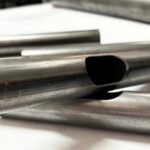
The heading machine is a key piece of equipment used to initially shape aluminum alloy tubes after material selection. This process lays the foundation for subsequent double-end drawing and processing operations, including heating the aluminum alloy material and then initially shaping it using a mold. This not only ensures the uniformity of the material and allows for precise control of the tube's shape and dimensions, ensuring consistency in subsequent processing, but also provides a solid foundation for later processing steps.
Click here to learn more → Detailed Explanation of the 1604N Round Head Machine
Video link for 1604N round head machine

Double-ended tube drawing technology: Precision forming and strength enhancement
Basic principles and applications of double-ended tubing
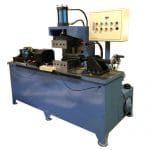
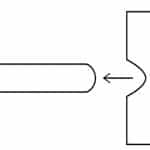
Double-ended tubing technology involves simultaneously stretching aluminum alloy tubing at both ends. This process allows the tubing to achieve the desired size, diameter, and shape while maintaining strength. The precise control offered by this technology makes it ideal for manufacturing lightweight and high-strength handlebars. This technology not only optimizes material use and reduces waste but also improves the strength and toughness of the tubing, making it suitable for a variety of riding needs.
Advantages of double-ended tube extraction technology
Double-ended tubing technology not only improves the strength and durability of materials but also reduces material waste during manufacturing. This is especially important for large-scale production, helping to control costs and improve production efficiency.
Click here to learn more → Detailed Explanation of the Dual-Station Pipe Extraction Equipment 6803B
Double-ended pipe cutter: Precision cutting and machining accuracy
Functions and operation of double-end pipe cutter
In the manufacturing process of aluminum alloy handlebars, the double-end tube cutter plays a crucial role. This machine can precisely cut aluminum alloy tubing, a process that requires not only high cutting precision but also a smooth, burr-free cut to facilitate subsequent processing and assembly. The double-end tube cutter ensures that the size and shape of each handlebar meet design standards, guaranteeing that each section conforms to design specifications. Precise cutting technology ensures the structural integrity of the handlebar, avoiding quality problems that may arise from uneven cutting.
Application of double-end tube cutting machine in bicycle parts manufacturing
Double-end tube cutting machines are not only used in the manufacture of handlebars, but also widely used in the production of other bicycle components, such as frames and pedals. Their precision and high efficiency make them an indispensable part of modern bicycle manufacturing.
Click here to learn more → Detailed Explanation of the 2806 Double-End Pipe Cutting Equipment
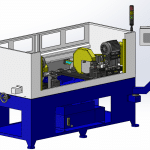
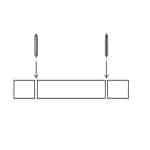

Driver's operation video of the double-ended pipe cutter 2805 equipment
Double-ended tube shrinking machine: Enhanced rigidity and durability
Detailed introduction to double-end shrink tube technology
Double-end shrinking machines are used to uniformly reduce the ends of aluminum alloy tubing. This process not only enhances the rigidity and strength of the tubing but also allows for adjustments to the shape and weight of the handlebars as needed. This technology is particularly suitable for manufacturing handlebars that need to withstand high loads. By controlling the degree of shrinkage, manufacturers can adjust the weight and performance of the handlebars to suit different riding styles.
Application range of double-end tube shrinking machine
Besides handlebars, double-ended shrink tubing technology is also widely used in other aluminum alloy products that require high strength and precise shape, such as aircraft parts and industrial machinery components.
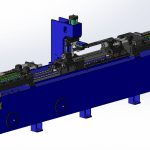
HC-6802A Aluminum Alloy Handlebar Retractor
Surface treatment and quality inspection: ensuring the highest standards for handlebars
Application of surface treatment technology
After all the processing steps are completed, aluminum alloy handlebars typically undergo surface treatment, including precise hole machining, surface polishing, and anodizing. These treatments not only improve the appearance of the handlebars but also increase their corrosion resistance and wear resistance, extending the product's lifespan.
Quality Inspection and Verification
Finally, all aluminum alloy handlebars undergo rigorous quality testing and verification, including durability and fatigue testing, to ensure that each product performs excellently in actual use.
The manufacturing process of aluminum alloy handlebars is a comprehensive system involving multiple advanced technologies and precision equipment. By rationally selecting materials and applying advanced processing techniques, manufacturers can produce high-quality handlebars that meet market demands for lightweight, high strength, and durability.